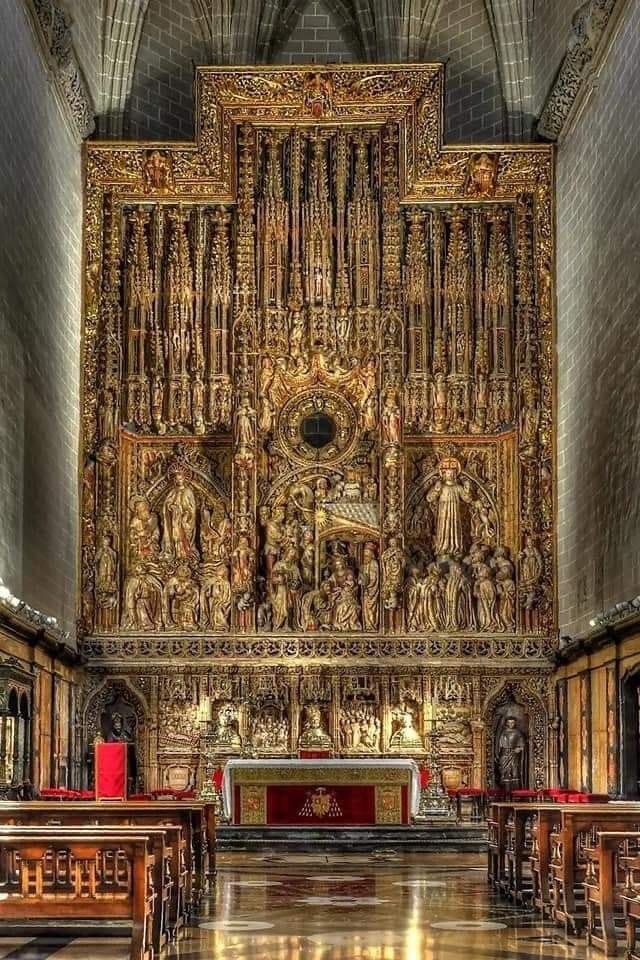
The Altar of the Cathedral of La Seo in Zaragoza, Spain, is a magnificent work of art that is renowned for its intricate carvings and detailed iconography. The altar was created in the 15th century by the Aragonese artist Damian Forment and is considered to be one of the finest examples of Renaissance sculpture in Spain.
The Altar of La Seo is filled with symbolic and religious imagery, including depictions of saints, angels, and scenes from the life of Christ. One of the most remarkable features of the altar is the intricate woodcarving that covers its surface, which is said to have been carved from a single block of wood.
The altar has a rich history, and over the centuries, it has been the subject of many mysteries and legends. One of the most famous legends associated with the altar concerns a hidden treasure that is said to be buried beneath it. According to the legend, the treasure was buried by the Moors during the Reconquista, and it includes gold and precious jewels.
Despite numerous attempts to find the treasure, it has never been discovered, and many believe that the legend is nothing more than a myth. However, the Altar of La Seo continues to be a popular destination for tourists and pilgrims who are drawn to its beauty and mystery.
Another mystery associated with the altar concerns the identity of the figures depicted in the carvings. While many of the figures are clearly identifiable as saints or biblical characters, others are more mysterious and have puzzled art historians and scholars for centuries.
Despite the mysteries and legends surrounding the Altar of La Seo, it remains an important and beloved work of art that continues to inspire awe and wonder in all who see it.
While many of the figures depicted in the carvings of the Altar of La Seo in Zaragoza, Spain, can be identified as saints, angels, or biblical characters, there are some mysterious figures that have puzzled scholars and art historians over the years.
One such figure is a bearded man who appears in a number of the panels on the lower part of the altar. He is sometimes depicted holding a book or a scroll, and he wears a distinctive hat that is similar to a Jewish yarmulke. Some scholars have suggested that this figure may represent a Jewish scholar or rabbi, and that his presence on the altar may be a reference to the Jewish community that lived in Zaragoza during the Middle Ages.
Another mysterious figure on the altar is a man who is depicted wearing a turban and a long robe. He appears in a number of the panels on the upper part of the altar, and he is sometimes accompanied by a group of similarly dressed men. Some scholars believe that this figure may represent a Moorish king or ruler, and that his presence on the altar may be a reference to the Muslim community that lived in Zaragoza during the Middle Ages.
There are also a number of other mysterious figures on the altar whose identities and significance are not fully understood. These include various animals, mythical creatures, and angelic beings, as well as a number of figures whose clothing and attributes suggest that they may represent historical or biblical figures who are not easily identifiable. Despite the mysteries surrounding these figures, they continue to fascinate and inspire those who view the altar and its intricate carvings.
The Altar of La Seo in Zaragoza, Spain, is considered to be one of the most important works of art in the history of Spanish sculpture. It was created by the Aragonese artist Damian Forment in the late 15th century, during the Renaissance period, and is renowned for its intricate carvings and detailed iconography.
The Altar of La Seo represents an important milestone in the development of Spanish art, as it was one of the first major works of art to be created in the Renaissance style in Spain. The altar was commissioned by the Cathedral of La Seo in Zaragoza as part of a larger project to renovate and modernize the cathedral.
The altar’s intricate carvings and detailed iconography are a testament to Forment’s skill as a sculptor, and they reflect the influence of Italian Renaissance art on Spanish art of the period. The altar’s depictions of saints, angels, and scenes from the life of Christ are rich in symbolism and religious meaning, and they demonstrate Forment’s mastery of the art of narrative sculpture.
The Altar of La Seo also has a significant place in the history of Spanish art as a symbol of the artistic and cultural achievements of the Aragonese region. The altar’s intricate carvings and rich iconography are a testament to the skill and creativity of the artists and craftsmen who worked on it, and they reflect the cultural and artistic richness of the Aragonese region during the Renaissance period.
The Altar of La Seo is an important and influential work of art that represents a major milestone in the development of Spanish sculpture and the Renaissance style in Spain. Its intricate carvings and rich iconography continue to inspire and fascinate art lovers and scholars to this day.