
The autumn sun in Speranza was the color of aged parchment, casting long, lazy shadows across the village market. In this village hidden in the Italian hills, time did not march; it strolled, pausing to admire the cobblestones and the ancient, ivy-draped arches. But on this particular Tuesday, the tranquil rhythm of Speranza was destined to shatter, replaced by the precise, ticking tension of a clock counting down to murder.
Before the chaos, there was only the comforting symphony of the morning. Across the main piazza stood three establishments, each governed by one of Moira’s dearest friends. To the left was Altea’s domain, the Cigar House, which always bled the deep, earthy aroma of rich soil and dark tobacco into the crisp air. To the right was Marisa’s Mint Chocolate Treasure House, a boutique that imported the most precious, silver-wrapped sweet products from every corner of the world, smelling sharply of dark cocoa and alpine mint. And perfectly centered between them was Anna’s Coffee Taverna, where the warm, sharp scent of roasting Arabica beans usually promised a safe, happy start to the day.
But Moira Hopes preferred the quiet shadows of her own sanctuary.
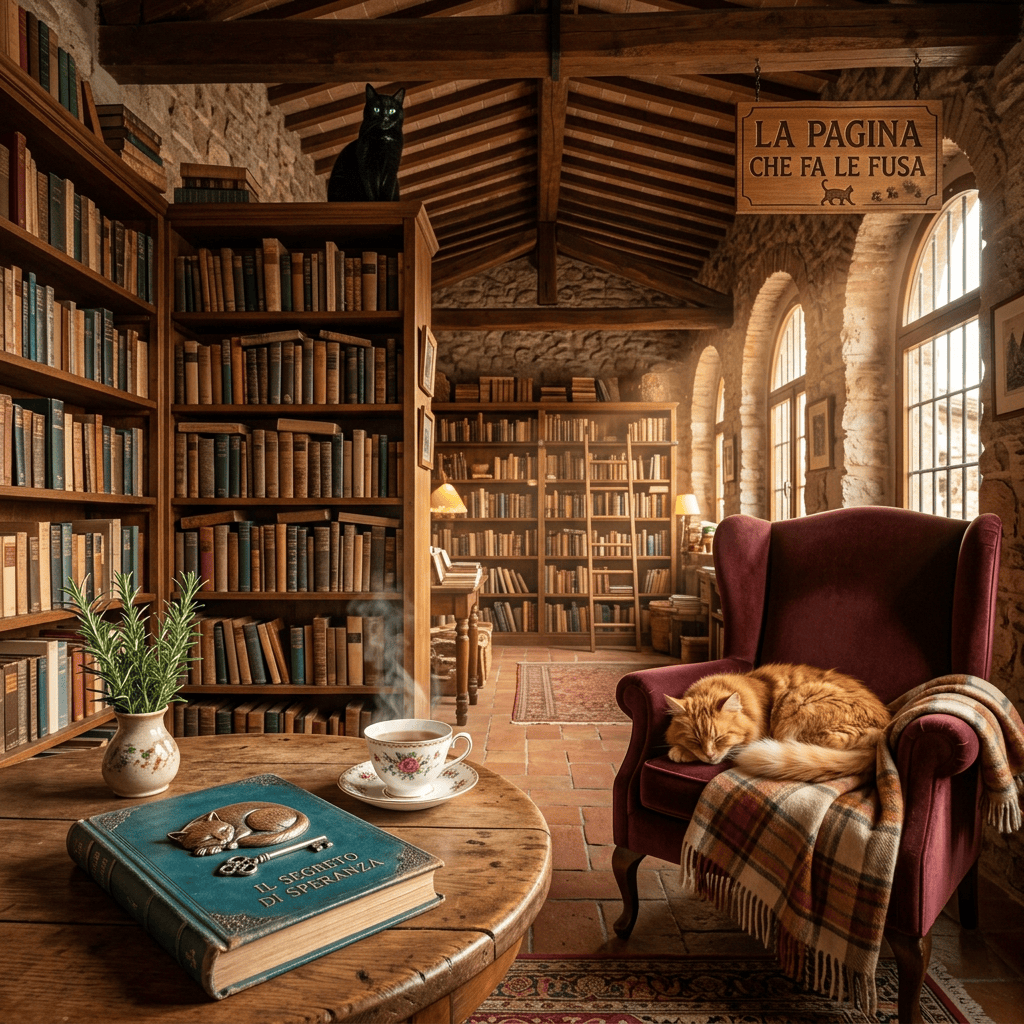
Tucked away down a narrow, cobbled alley, hidden beneath a stone archway swallowed by thick green ivy, sat a dark wooden door with a small, wrought-iron sign: La Pagina che Fa le Fusa. Pushing open that door was not stepping into a shop; it was crossing the threshold into a timeless refuge. The air inside was perpetually warm, heavy with the scent of antique paper, crushed rosemary, and a sweet, lingering note of chamomile.
Moira stood behind the massive oak counter, moving with calm, measured gestures as she arranged porcelain teapots and glass jars filled with loose leaves. Above her, the heavy, dark wooden beams seemed to hold back the outside world. The silence of the room was broken only by the soft rustle of turning pages and a low, constant vibration—the sound of happy cats purring.
Ashwaganda, a large ginger cat with long, thick fur, was currently curled into a tight ball on a plaid wool blanket draped over a slightly worn, bordeaux velvet armchair. From the dizzying height of a top bookshelf, a pair of glowing green eyes watched the dust motes dance in the slanted rays of the sun; Toe, the sleek black cat, sat like a dark silhouette against the cracked leather spines of old volumes.
The peace was interrupted by the chime of the shop bell. Altea stepped in, her boots clicking sharply against the worn terracotta floor. She smelled of rain and unlit cigars.
“They are insufferable, Moira,” Altea announced, her voice a raspy whisper that carried the weight of a seasoned cynic. She sank into a smaller wooden armchair, ignoring the small ceramic vase of fresh rosemary on the table beside her. “That traveling theater troupe. The lead actor, Marco. He just came into my shop, picked up my finest Cuban, sniffed it, and put it back as if it were common weeds. The man has eyes like a dead fish. Cold. Calculating.”
Marisa followed closely behind her, meticulously brushing an invisible speck of dust from her pristine white coat. “He is worse than rude, Altea. He is a predator. I saw him speaking with the mayor’s daughter yesterday. He was leaning in too close, smiling that sharp, fake smile. He whispered something, and she looked terrified. I would bet my finest Swiss dark chocolate he is blackmailing half the village already.”
“We must not jump to conclusions,” Moira said softly, though a knot of Hitchcockian dread tightened in her stomach. She wiped down the keys of her old typewriter.
“I am not jumping, Moira. I am observing,” Marisa corrected, tapping a manicured finger on the wooden table.
Their quiet deduction was cut short by a sound that did not belong in Speranza. It was a scream—high, sharp, and echoing from the direction of the main piazza.
The three women exchanged a single, chilling look. Toe let out a low yowl from the top shelf, while Ashwaganda’s ears pinned back against his ginger head. Moira abandoned her teapots, Altea pushed her chair back violently, and together they ran out from beneath the ivy-covered archway.
They arrived at the Coffee Taverna to find a crowd gathering. Inside, the warm smell of coffee had been tainted by something sharp and deeply unnatural.
Anna was backed against her espresso machine, her hands covering her mouth, her eyes wide with a terror that Moira had only ever seen in her medical patients at the very end.
Slumped over a small, wrought-iron table in the back corner was Marco, the lead actor. His handsome face was contorted into a grotesque mask of agony, his cold eyes staring blankly at the ceiling. A small, white porcelain cup lay shattered at his feet, a dark pool of espresso seeping into the grout of the floor tiles.
Moira’s medical instincts took over. She pushed through the murmuring crowd, kneeling beside the fallen actor. She pressed two fingers to the carotid artery. Nothing. The skin was still warm, but the life had been abruptly, violently snatched away.
She leaned closer to his face. Beneath the overpowering aroma of Anna’s dark roast, Moira detected a faint, distinct scent. Bitter almonds. But underneath that, something else… a sharp, chilling note of intense, artificial mint.
“He… he just drank it,” Anna stammered, tears spilling over her cheeks. “I made it myself. A black coffee. Just like he asked. He took one sip, clutched his throat, and…”
“Don’t say another word, Anna,” Altea commanded gently, stepping in front of the trembling barista just as Ispettore Salomone pushed his way into the Taverna, looking profoundly weary.
“Nobody moves,” the Ispettore ordered, his eyes sweeping the room before landing heavily on Anna. “Signorina, I will need to take that espresso machine apart. And you will need to come with me.”
The trap had been sprung. It was a classic misdirection, Moira thought, her mind racing like a metronome. The killer had used Anna’s coffee as the weapon, knowing the kind, beloved barista would be the most obvious, yet most illogical, suspect.
That evening, the tea shop was closed to the public. The golden dust motes of the afternoon had vanished, replaced by the intimate, welcoming glow of small table lamps with cream-colored fabric shades.
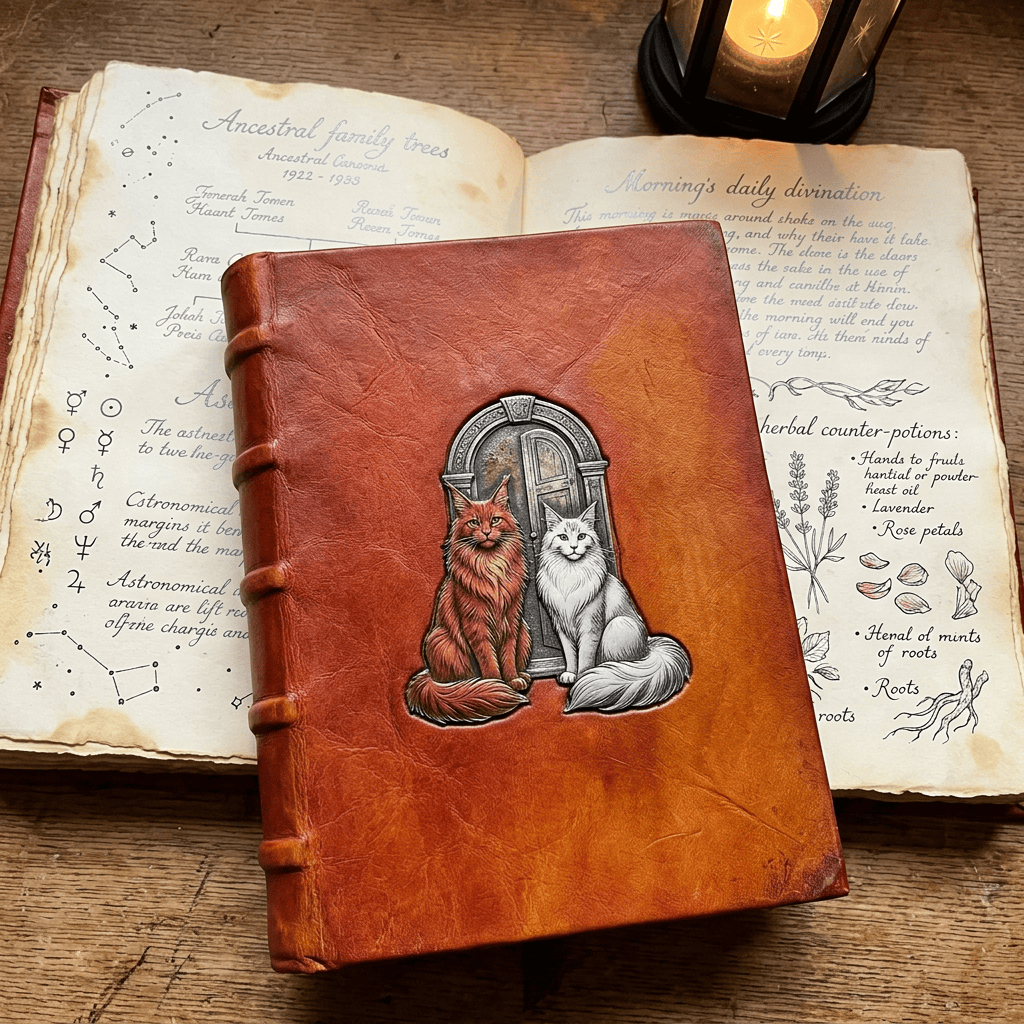
Moira sat in the bordeaux armchair, Ashwaganda purring a steady, grounding rhythm against her leg. On the small table before her lay her most prized possession. She had found it amidst a dusty pile of forgotten histories in the village market. It was bound in faded peacock-blue leather, muted and dusty with hints of green showing through. There was no title on the cover, only a tarnished silver-stamped emblem of a sleeping cat curled protectively around an old-fashioned, ornate key.
Moira ran her fingers over the supple, cracked leather, feeling the worn texture of its long life. She opened it. The thick, creamy-yellow parchment pages rustled softly, releasing a faint, dry scent of dust and pressed flowers. The text inside was penned in a shimmering silver ink that seemed to shift and glow in the lamplight.
“The police think it’s Anna,” Altea said from the shadows, her unlit cigar rolling anxiously between her fingers.
“It isn’t Anna,” Marisa said, her voice trembling slightly. “But whoever it is, they used mint to mask the poison. And I am the only one who sells mint in this town.”
“They are framing the village,” Moira said, her voice a calm whisper in the quiet sanctuary. She looked down at the archaic, cryptic writing in the book. It was an object of personal magic, a companion of forgotten wisdom.
She turned to a page bordered with small, hand-drawn celestial charts in silver ink. The entry she sought was short and prophetic.
The bitter seed wears a sweet coat. To find the serpent, follow the discarded skin.
Moira looked up, her eyes catching the green gaze of Toe, who was currently pawing at something shiny he had dragged in from the alleyway.
“We are not waiting for the Ispettore to solve this,” Moira announced, closing the beautiful, unostentatious book. “The play has ended for Marco, but for the killer, the curtain is just rising. And they do not realize they have stepped onto our stage.”





Leave a Reply