The Chinese-Vietnamese War of 1979, also known as the Sino-Vietnamese War, was a brief but intense conflict that occurred between the People’s Republic of China (PRC) and the Socialist Republic of Vietnam. The war started on February 17, 1979, when China launched a punitive expedition into Vietnam’s northern territories, citing Vietnam’s invasion and occupation of Cambodia in late 1978 (which overthrew the Chinese-backed Khmer Rouge regime), and Vietnam’s alignment with the Soviet Union amidst growing Sino-Soviet tensions as primary reasons for the invasion.
The conflict was rooted in a complex web of historical animosities, territorial disputes, and Cold War-era alignments. China aimed to punish Vietnam for its actions in Cambodia, assert its dominance in the region, and signal its displeasure at Vietnam’s growing ties with the Soviet Union, China’s rival.
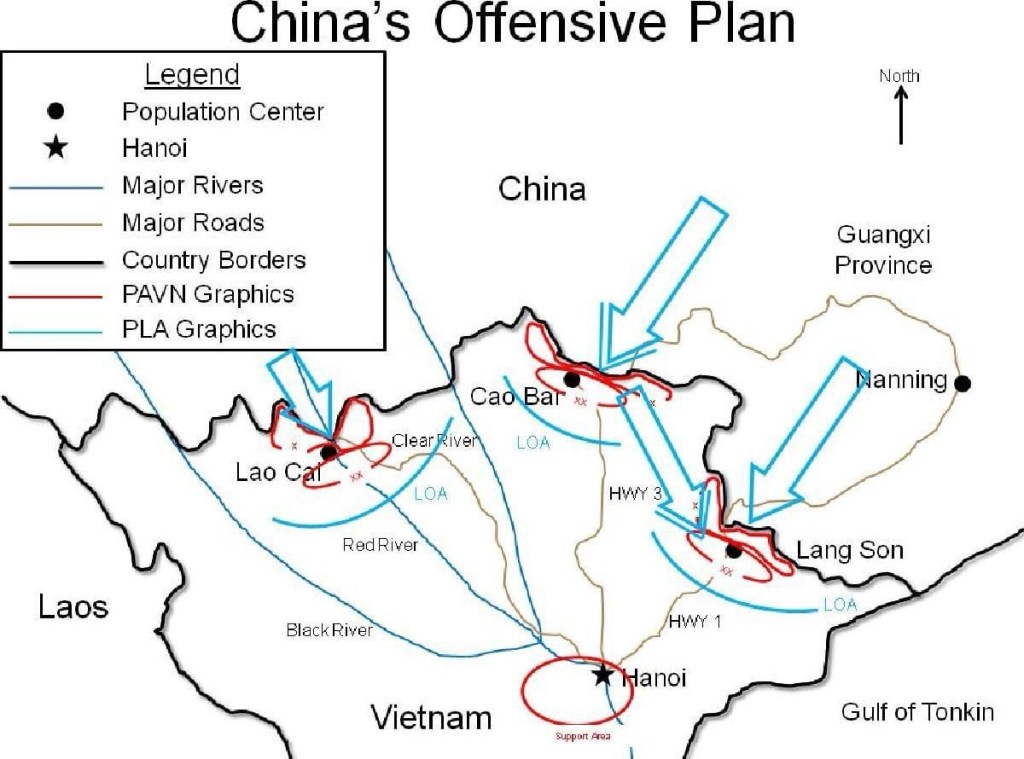
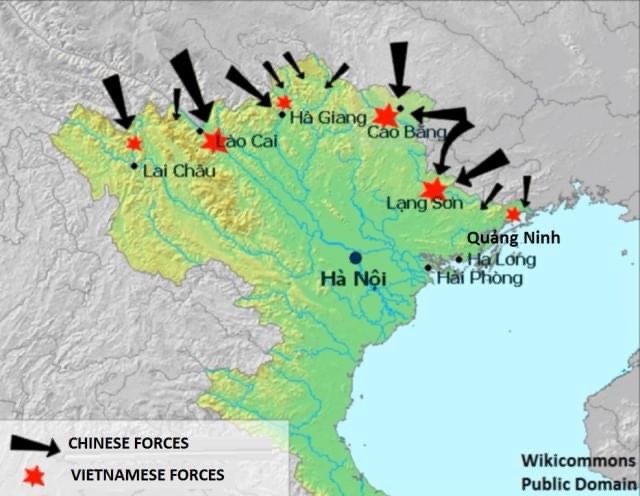
The fighting was fierce and caused heavy casualties on both sides. Chinese forces pushed into Vietnam, capturing several towns and cities along the border. However, the Vietnamese, experienced from years of warfare against the United States and France, mounted a strong and effective guerrilla resistance, making the Chinese advance costly.
After a few weeks of fighting, Chinese forces withdrew on March 16, 1979, declaring that they had achieved their objectives. The war officially ended with both sides claiming victory. China had demonstrated its military might and willingness to use force to settle disputes, but Vietnam remained in control of Cambodia until 1989, and its government remained unchanged.
The war had significant implications for regional politics, deepening the rift between China and the Soviet Union, and affecting Vietnam’s international relations and economic conditions due to Chinese sanctions and continued border conflicts in the years that followed. The conflict also left unresolved territorial disputes between China and Vietnam, which continue to strain relations to this day.
The aftermath of the 1979 Sino-Vietnamese War had long-lasting effects on regional diplomacy, military postures, and the international alignment of countries in Southeast Asia. The war underscored the complexity of relationships entangled with the broader dynamics of the Cold War, setting the stage for the future geopolitical landscape of the region.
Continued Tensions and Border Skirmishes
Following the official cessation of hostilities in March 1979, the border between China and Vietnam remained tense, with sporadic clashes continuing into the 1980s. These skirmishes underscored the unresolved nature of their territorial disputes and kept the region in a state of unease. Both countries invested heavily in fortifying their borders, maintaining large military presences that strained their economies and resources.
Impact on Vietnam
For Vietnam, the war further isolated it internationally at a time when it was already facing economic difficulties. The conflict with China, coupled with the ongoing occupation of Cambodia, led to increased economic sanctions and diplomatic isolation from many Western and ASEAN countries. Vietnam became increasingly dependent on Soviet support, which came in the form of economic aid and military equipment, further aligning Hanoi with Moscow during the final decade of the Cold War.
China’s Strategic Calculations
China’s decision to withdraw without occupying significant Vietnamese territory was seen as a strategic move. It demonstrated China’s military capability and willingness to engage in combat operations to defend its interests, yet it also highlighted China’s restraint and its desire not to get entangled in a protracted conflict. The war served as a warning to the Soviet Union against further expansion in Southeast Asia and was a factor in the normalization of relations between China and the United States, as both countries viewed the Soviet Union as a common threat.
Regional and Global Implications
The war had significant implications for regional alliances and the global balance of power. ASEAN countries, while wary of Vietnam’s actions in Cambodia, were also concerned about China’s military assertiveness. This period saw the beginnings of what would later become more extensive diplomatic and economic engagement between China and Southeast Asian countries, as part of China’s broader strategy to reassure its neighbors and project soft power.
Globally, the conflict highlighted the shifting dynamics of the Cold War, with China moving closer to the West in opposition to the Soviet Union. This realignment would have profound effects on international relations in the subsequent decades, contributing to the end of the Cold War.
Legacy
Today, the Sino-Vietnamese War of 1979 is remembered as a tragic episode that underscored the complexities of international relations in Southeast Asia. It serves as a reminder of the devastating impact of war and the importance of resolving disputes through diplomatic means. While China and Vietnam have made significant strides in improving their bilateral relationship, the war’s legacy still lingers in their collective memory, informing their cautious approach to handling present-day territorial and maritime disputes in the South China Sea. The war thus remains a critical study in the interplay between national ambitions, regional dynamics, and global strategies.









Leave a Reply