Here is a possible rewritten and summarized version of the text, with more citations and historical language:
The year of our Lord 1897 brought a great tempest to the shores of Sumburgh, where John Bruce, the eleventh Lord of Sumburgh, beheld a wondrous sight. The storm had laid bare the ancient foundations of many buildings, long buried under the sand of his estate on Sumburgh Head. These ruins, which had been only whispered of in legends, were of such antiquity that Bruce could scarcely fathom their origin. He did not know then that they dated back to ages before the Christian era, and spanned many centuries and cultures.
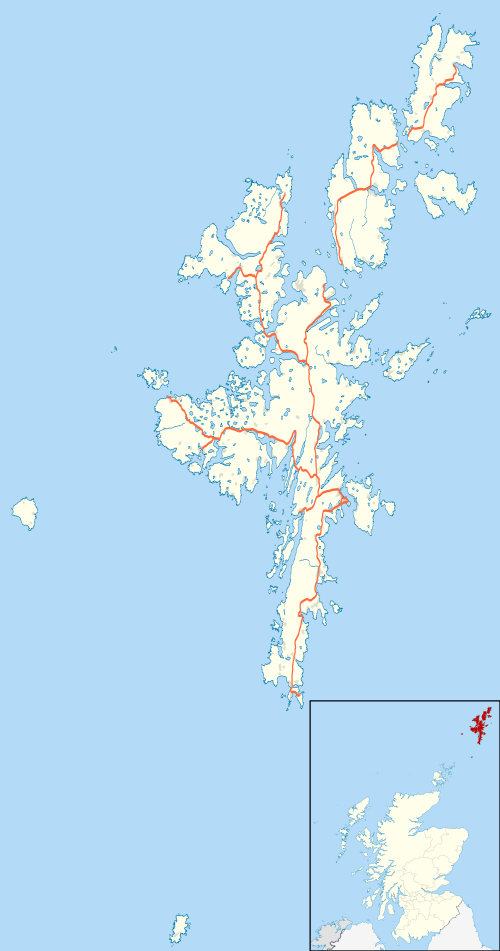
Sumburgh lies in the Shetland Islands, a remote and barren archipelago in the northern seas, between Scotland and Norway. Many people know little of these islands, except for their small and sturdy ponies, which are often seen at fairs or in mines. The islands seem to have been neglected by civilization for millennia, for they lack natural resources such as timber, and are exposed to harsh winds and waves. Few would choose to settle in such a place, especially when sailing was the only means of travel.
Yet the Shetlands have a rich and varied history, stretching back to the dawn of recorded time. They consist of about a hundred islands, but only sixteen are inhabited today. The largest is called Mainland, which is the fifth biggest island in the British Isles. It covers 373 square miles, while the rest of the islands together make up less than 200 square miles. The chief town of the islands is Lerwick, where about half of the 23,000 inhabitants live. The islands are situated at the meeting point of two great oceans, the Atlantic and the North Sea, and are close to other lands, such as Orkney, Faroe, and Norway. This made them a strategic location for Viking raids and exploration from the ninth century onwards. The Shetlands were part of Norway until 1469, when King Christian I gave them up to Scotland as part of his daughter’s dowry.
The name “Shetland” comes from the Old Norse “Hjaltland”, which may have referred to an earlier Celtic tribe that lived there before the Vikings came. The Gaelic name for the islands was “Insi Catt”, or “Isle of the Catts”, after the Picts who ruled over them from Caithness in mainland Scotland. In 1190, a letter from the Norse Earl of Orkney, who also controlled Shetland and Caithness, showed that the “C” in “Catt” was pronounced as an “H”. By the 15th century, the name had changed to “Hetland”. Later, an old Scots letter called “yogh”, which looked like a “Z”, replaced the “H”, and the name became “Zetland”. Finally, it was anglicized to “Shetland”, much like Jarlshof itself.
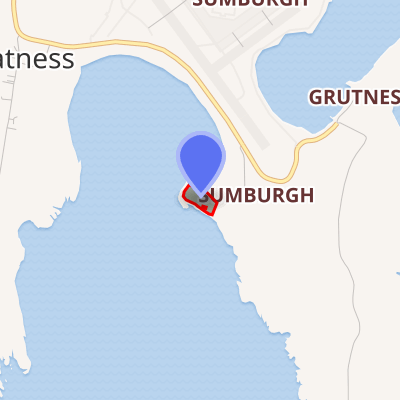
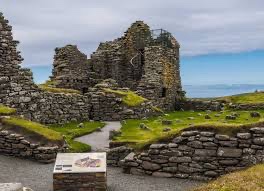
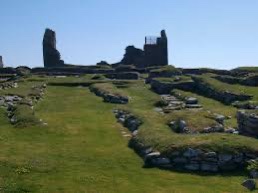
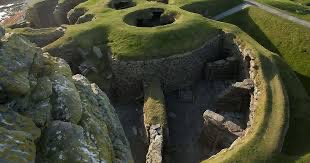
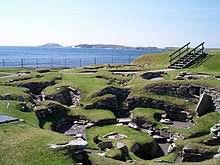
Jarlshof is a name invented by Sir Walter Scott in his novel The Pirate , published in 1821. He based it on an old house near West Voe, a small bay on the southern tip of Mainland. The house belonged to the Bruce family since the late 16th century, except for a brief period when it was seized by Robert and Patrick Stewart, two notorious earls who oppressed the islanders. John Bruce (1837-1907), the eleventh Lord of Sumburgh, started digging around Jarlshof in 1897, after the storm revealed some ancient walls. He continued his work until 1906, uncovering a remarkable sequence of stone structures that spanned several periods of history.
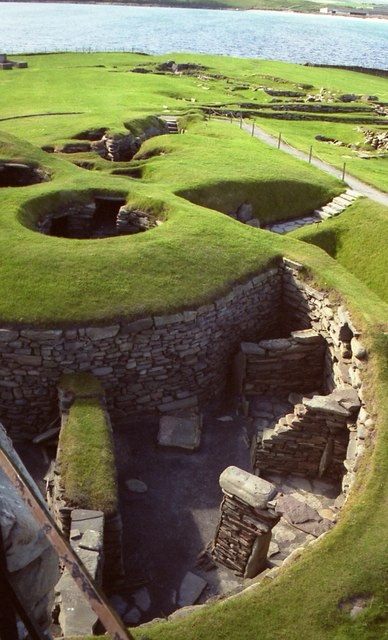
Jarlshof contains remains from the late Neolithic era (around 2700 BC) to the 17th century AD. It shows evidence of Bronze Age houses and smithies (around 2000 BC), Iron Age roundhouses and brochs (from around 800 BC to AD 400), Pictish wheelhouses and huts (from around AD 400 to 800), Norse longhouses and outbuildings (from around AD 800 to 1400), and Scottish farmsteads and manor houses (from around AD 1400 to 1600). It is one of the most remarkable archaeological sites ever excavated in Britain, and reveals much about the life and culture of Shetland’s past inhabitants.





Leave a Reply